
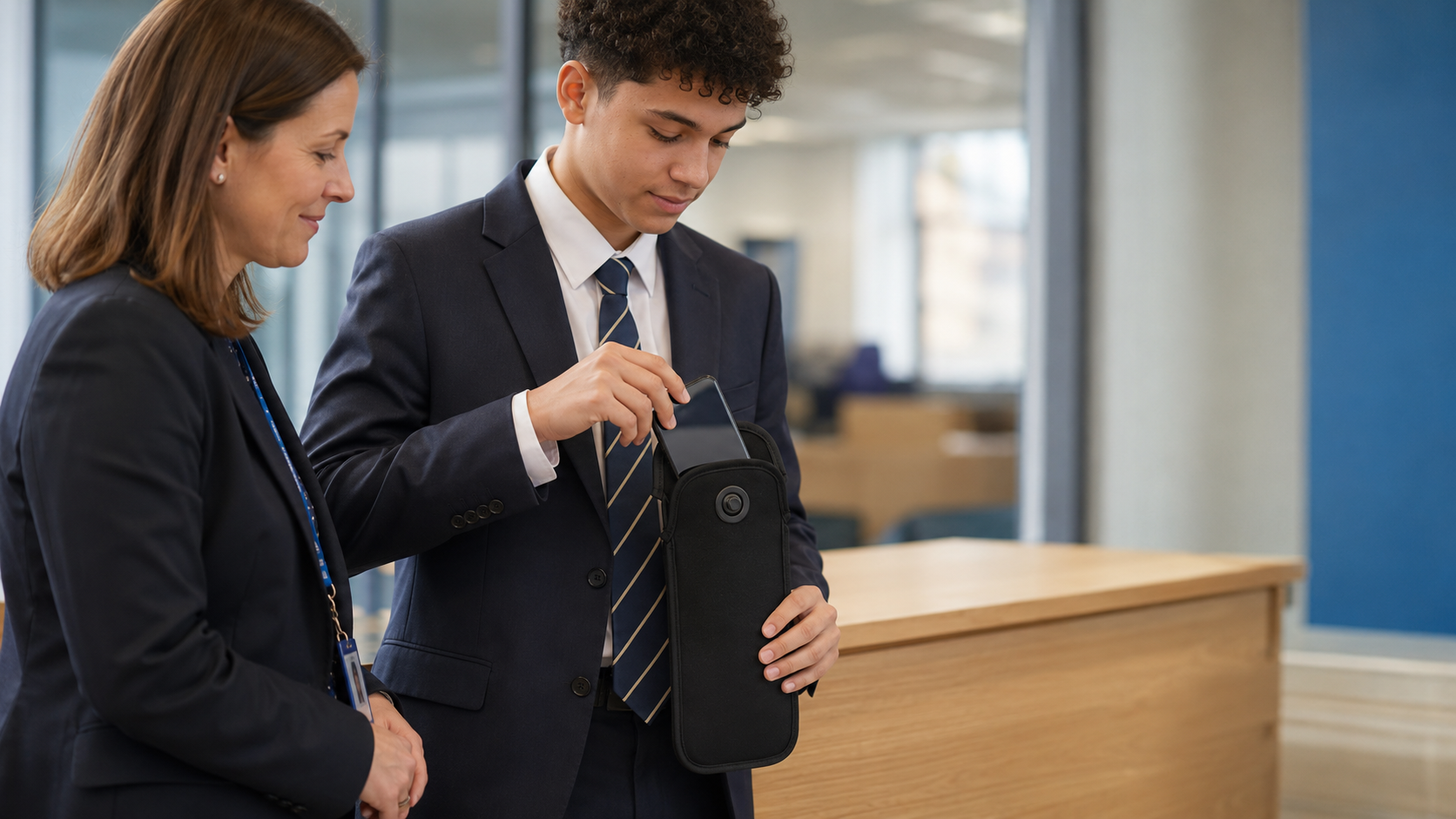
A lockable phone pouch is a simple idea: the pupil keeps their own phone with them all day, but the phone is sealed inside a pouch that only a magnetic unlocking device can open. Nothing is confiscated, the school never takes custody of an expensive device, and the phone is genuinely inaccessible between the first bell and the last.
The school day, step by step
Arrival
Phone goes into the pupil's own pouch at the gate or in registration, and stays with them.
During the day
The pouch stays locked. No trays, no queues and no school custody of expensive devices.
Home time
Pupils tap the pouch on a magnetic base at the exit and walk out with an unlocked phone.
1. Arrival
Pupils put their phone into their own pouch and close it. At most schools this happens as they come through the gate or in the first few minutes of registration, with duty staff spot-checking rather than searching. The pouch then goes in the bag or blazer pocket — the pupil keeps it.
2. During the day
The pouch stays locked. Pupils can feel the phone vibrate but cannot see or use the screen, and because the phone never leaves them there is no queue, no storage tray and no dispute about who owns what. Smartwatches and earbuds can go in the same pouch where your policy covers them.
3. Home time
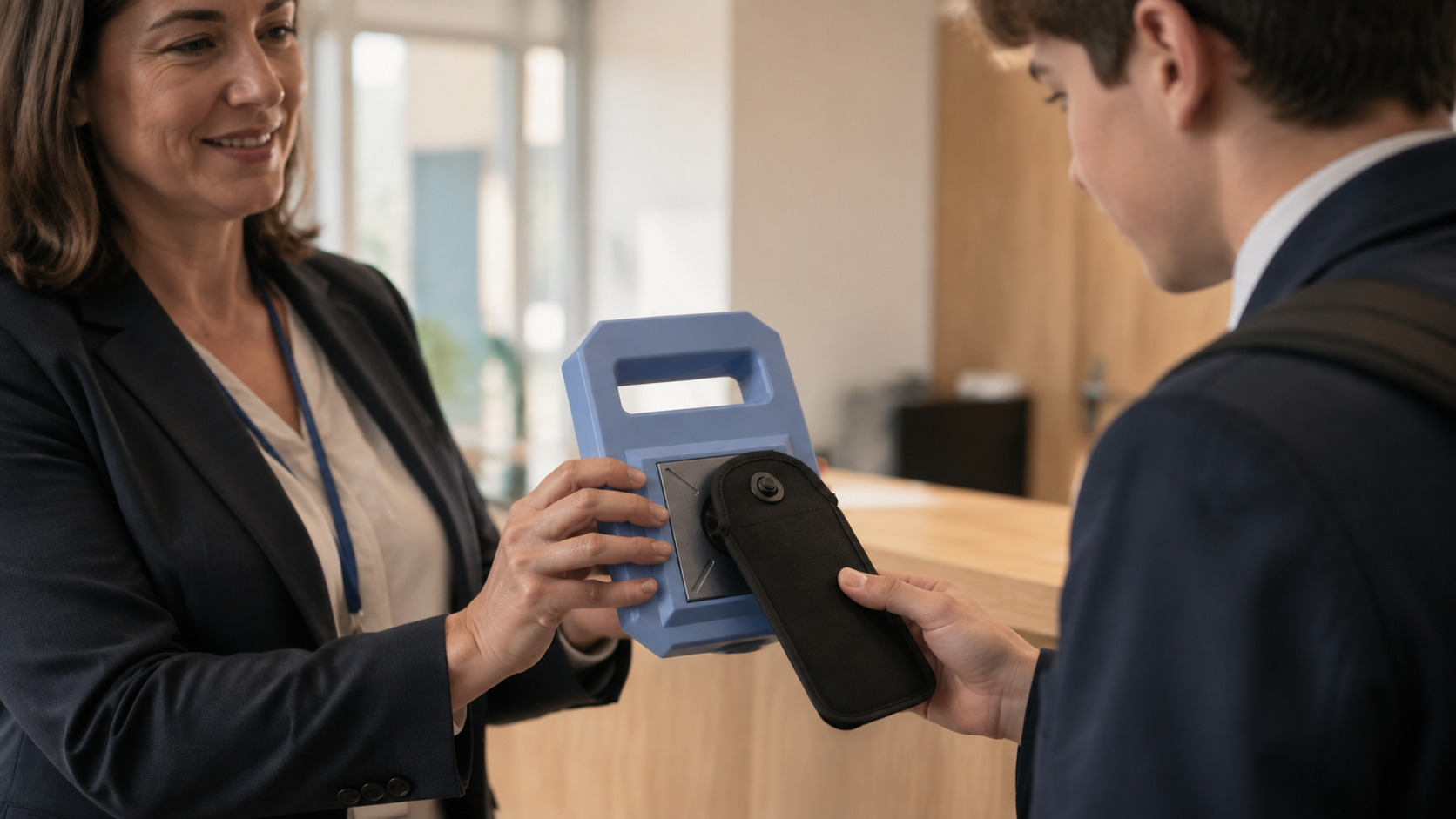
Pupils tap their pouch against a magnetic unlocking base as they leave. Bases are wall-mounted or free-standing near exit points, need no power or software, and a stream of pupils can pass a bank of them in seconds. Larger schools typically place one base per exit gate.
Emergencies and exceptions
- Staff handheld keys. Pastoral staff, first aiders and the office carry handheld magnetic unlockers, so any pouch can be opened immediately when there is a genuine need.
- Parent contact. Parents call the school office, exactly as they did before phones were in pockets — the office remains the fastest, most reliable route.
- Medical needs and reasonable adjustments. Pupils who rely on a phone for glucose monitoring, assistive technology or an agreed care plan are exempted in policy, with an unlocked pouch or an agreed alternative arrangement.
- Lessons that use devices. A member of staff with a handheld key can unlock and re-lock a class in a couple of minutes where a lesson genuinely needs phones.
What makes it work in practice
- Consistency. The policy applies to every pupil, every day. Partial bans are what generate arguments.
- Clear communication first. Two weeks of parent and pupil messaging before launch removes almost all of the friction, particularly around emergencies.
- A named consequence for a non-compliant pouch. Tampering or arriving with an empty pouch should sit in your existing behaviour policy rather than a new one.
- Enough unlocking points. Under-providing bases is the single most common cause of a slow, unpopular home time.
Common questions
Can pupils break them open? The lock is magnetic and the pouch is tamper evident, so a forced pouch is obvious. In practice, once the whole school is in the same system, the social pressure to circumvent it largely disappears.
What about a lost or damaged pouch? Schools hold a small buffer stock and treat replacements the same way they treat a lost planner or tie.
Does it comply with the 2026 guidance? Yes — pouches are a practical way to be mobile-phone-free by default while pupils retain their own property. See our DfE 2026 briefing.
Compare pouch sizes and unlocking equipment or request a sample pack to try the system with your leadership team.