
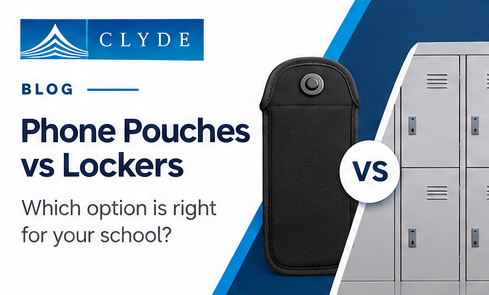
Both pouches and lockers keep phones out of pupils' hands during the day. They work very differently, though, and the right choice depends on your building, your pupil numbers and your budget.
How each one works
- Pouches. Pupils lock their phone in their own pouch on the way in and keep it with them. They unlock it on a magnet on the way out.
- Lockers. Pupils store their phone in a locker, usually in one place, and collect it at the end of the day.
Side by side
| Pouches | Lockers | |
|---|---|---|
| Space needed | None, the phone stays with the pupil | Wall space for every pupil's phone |
| Morning and home time | Lock and go, unlock at any exit | Queues at the lockers |
| Who's responsible for the phone | The pupil | Often the school |
| Trips and split sites | Works anywhere | Tied to where the lockers are |
| Cost | One pouch per pupil plus unlock stations | Locker units, installation and keys or codes |
When lockers can make sense
A small school with a single entrance and plenty of wall space may find lockers workable. For most secondaries, the space needed and the queues at the start and end of the day make pouches the simpler option.
Why many schools choose pouches
The phone never leaves the pupil, so the school isn't storing hundreds of valuable devices. Pouches cost from £7 each for large volumes, typically around £9 per pupil for an average senior school once magnets and extras are included.